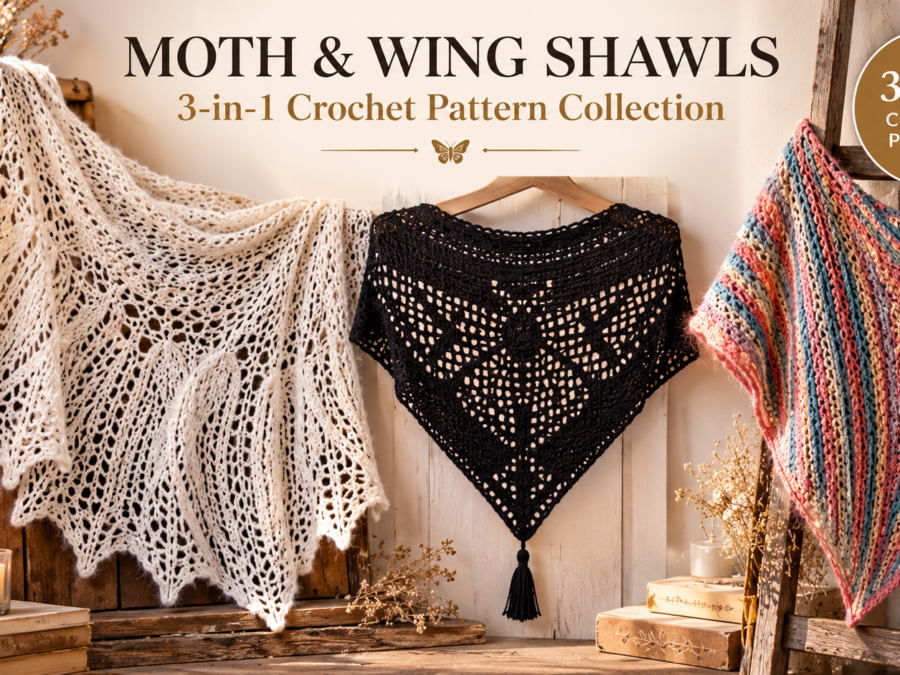
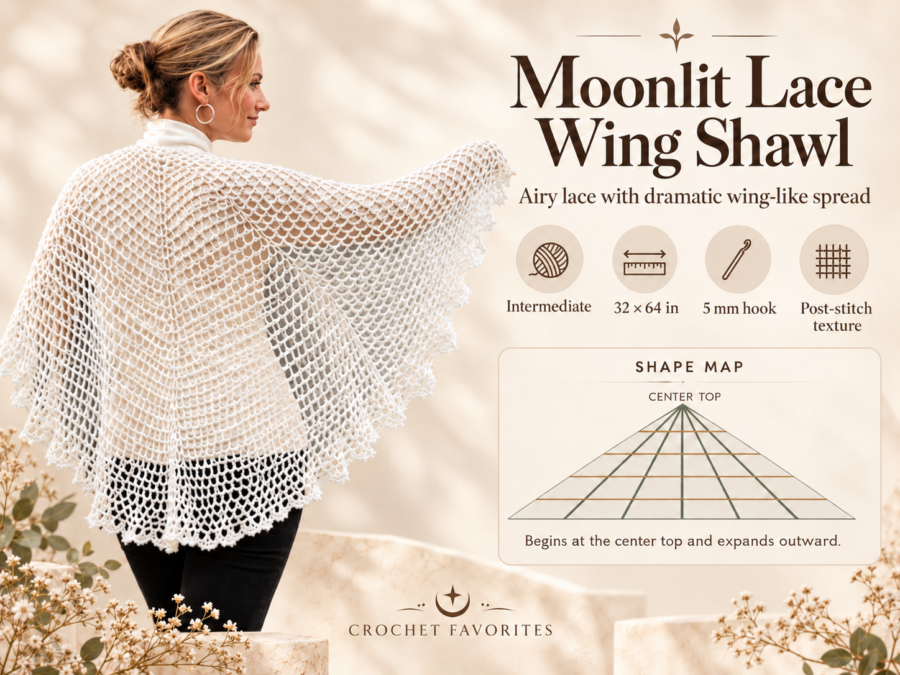
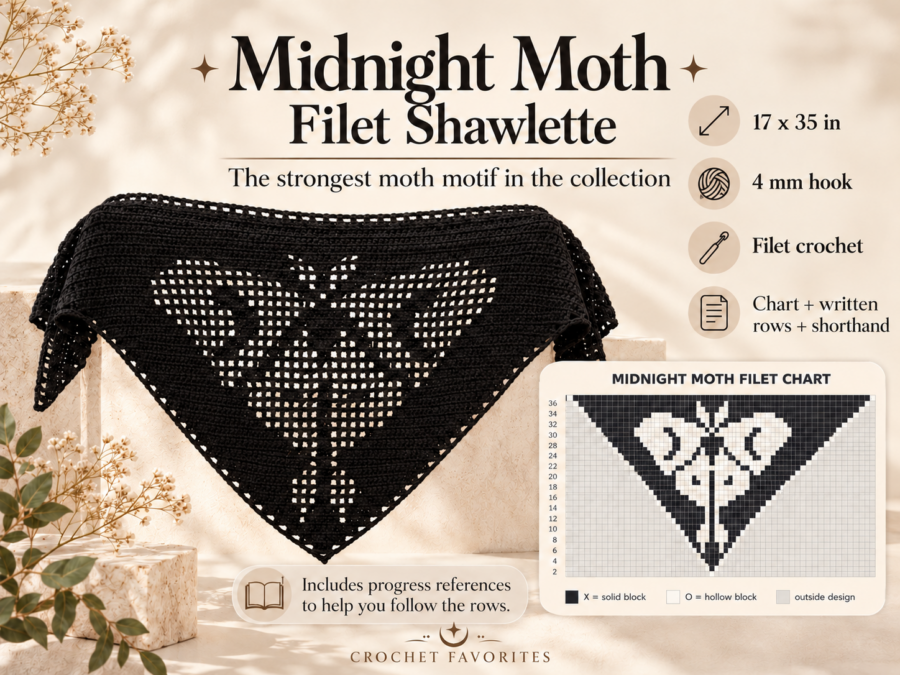
Easy Triangle Shawl Crochet Pattern: Prism Wing Wrap
CROCHET FAVORITES
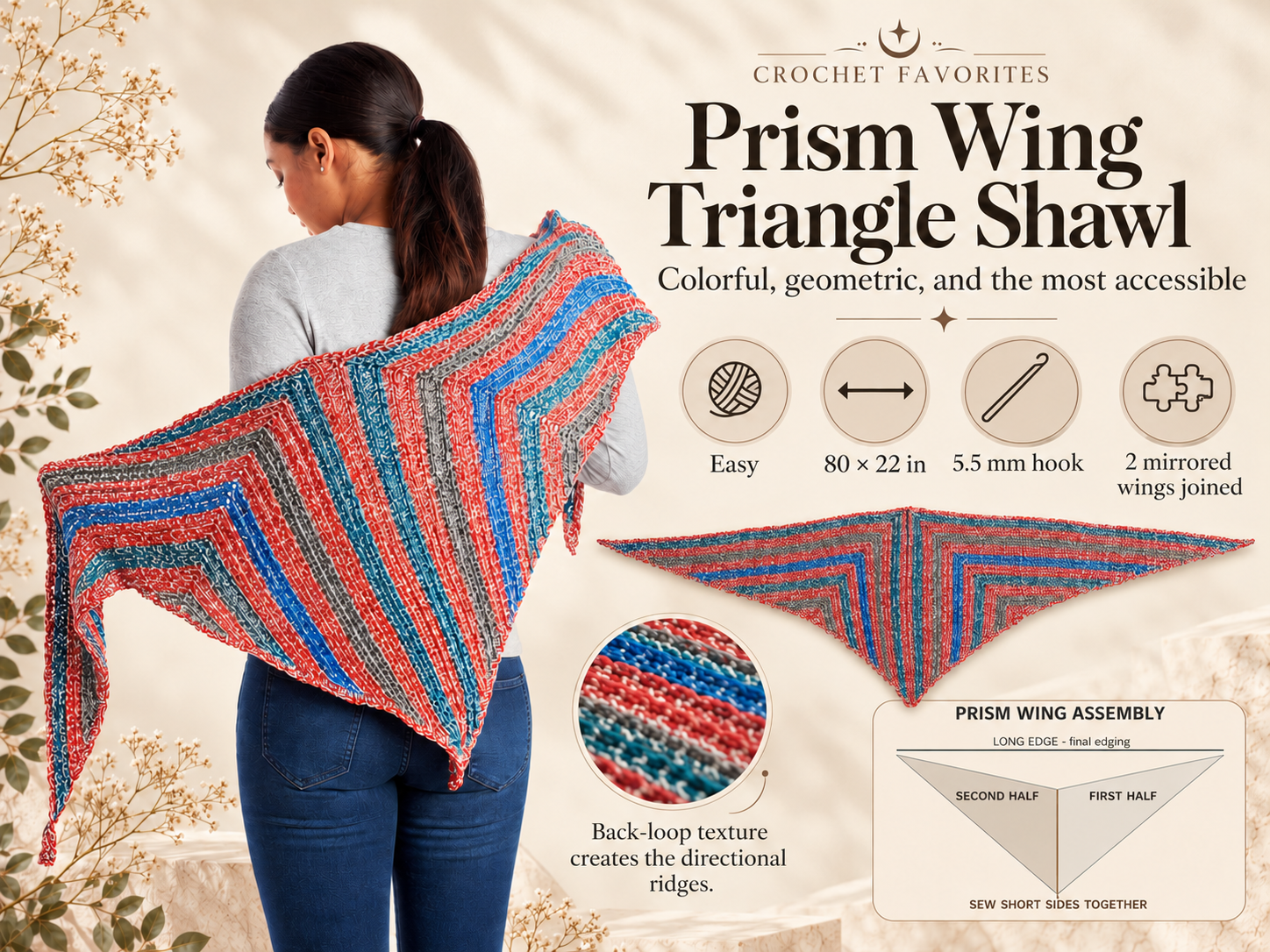
A striped two-wing construction worked mostly in back-loop single crochet.
Publishing & SEO
About the Prism Wing Triangle Shawl
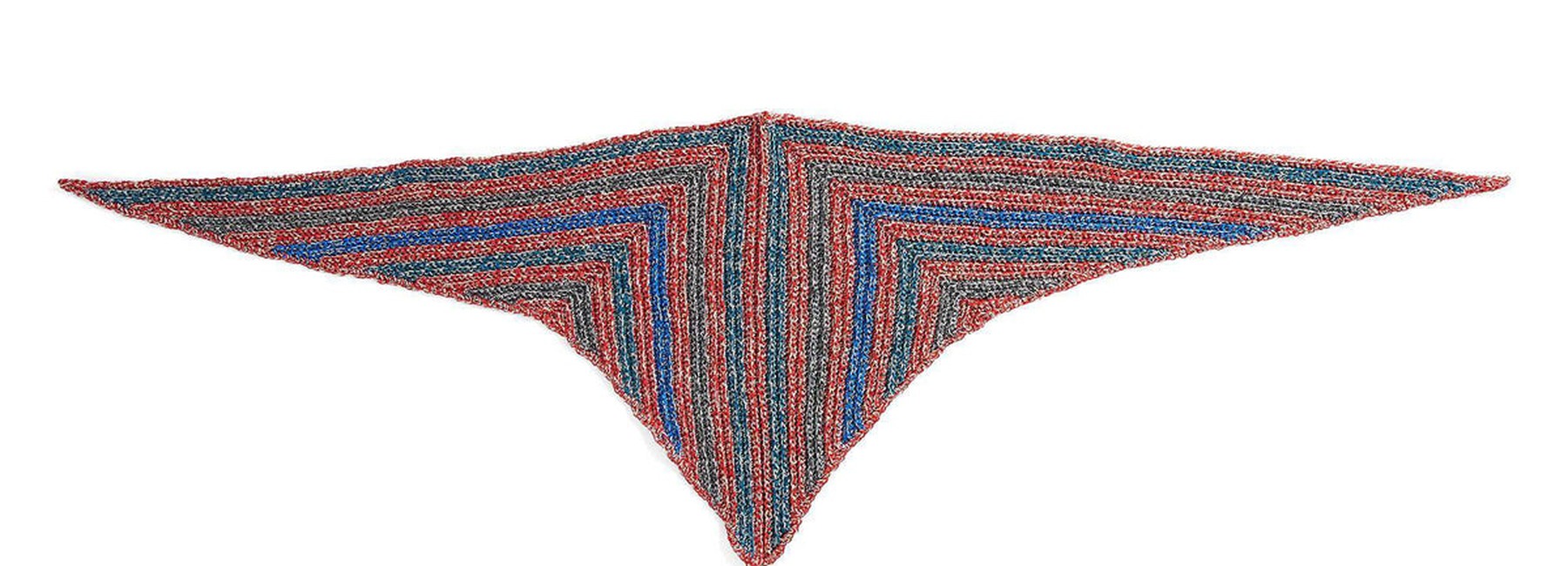
Prism is the easiest pattern in the collection and the most color-driven. Each half grows around a moving center increase, producing an angular wing shape. Make the second half the same way, then join the two short sides to create the center spine of the shawl.
PATTERN AT A GLANCE
Skill level: Easy • Finished size: approx. 80 × 22 in / 203 × 56 cm • Yarn weight: Medium / #4 • Four colors, approx. 240 yd / 219 m each • Hook: 5.5 mm / US I-9 • Gauge: 12 sc and 13 rows = 4 in / 10 cm.
Abbreviations
| Abbreviation | Meaning |
| ch | chain |
| dc | double crochet |
| hdc | half double crochet |
| sc | single crochet |
| st(s) | stitch(es) |
| RS | right side |
| WS | wrong side |
| PM | place marker |
| scbl | single crochet in back loop only |
Stripe sequence
A: 4 rows → B: 4 rows → A: 4 rows → C: 4 rows → A: 4 rows → D: 4 rows. These 24 rows form the stripe pattern.
Prism Wing crochet pattern
Row 1. With A, ch 2. RS: (1 sc, 1 hdc, 1 dc) in 2nd ch from hook. 3 sts.
Row 2. Ch 3. (1 hdc, 1 sc) in back loop of first dc. 3 scbl in next hdc. 2 scbl in last sc. Turn. 8 sts.
Row 3. Ch 1. 2 scbl in first sc. 1 scbl in each of next 2 sc. 3 scbl in next sc. 1 scbl in each st to last dc. (1 sc, 1 hdc, 1 dc) in last dc. Turn. 13 sts.
Row 4. Ch 3. (1 hdc, 1 sc) in back loop of first dc. 1 scbl in each of next 6 sts. 3 scbl in next sc. Place marker on center sc of that 3-sc group. 1 scbl in each sc to last sc. 2 scbl in last sc. Join B. Do not break A. Turn. 18 sts.
Row 5. With B, ch 1. 2 scbl in first sc. 1 scbl in each sc to center marked sc. 3 scbl in next sc. Move marker to center sc of the new 3-sc group. 1 scbl in each st to last dc. (1 sc, 1 hdc, 1 dc) in last dc. Turn.
Row 6. Ch 3. (1 hdc, 1 sc) in first dc. 1 scbl in each st to center marked sc. 3 scbl in next sc. Move marker to center sc of the new 3-sc group. 1 scbl in each sc to last sc. 2 scbl in last sc. Turn.
Continue to size
The first 6 rows of the stripe pattern are complete. Keeping the 24-row stripe sequence, repeat Rows 5 and 6 until the shorter side measures about 22 in / 56 cm, ending with 2 rows of Color A. Fasten off.
COLOR HANDLING
Do not break Color A. Carry A neatly up the side while it is not in use. When changing color, work to the last 2 loops on the hook and draw the new color through those loops.
CENTER MARKER
Move the marker to the new center stitch every row. Missing that center increase changes the wing angle.
Join the two wings
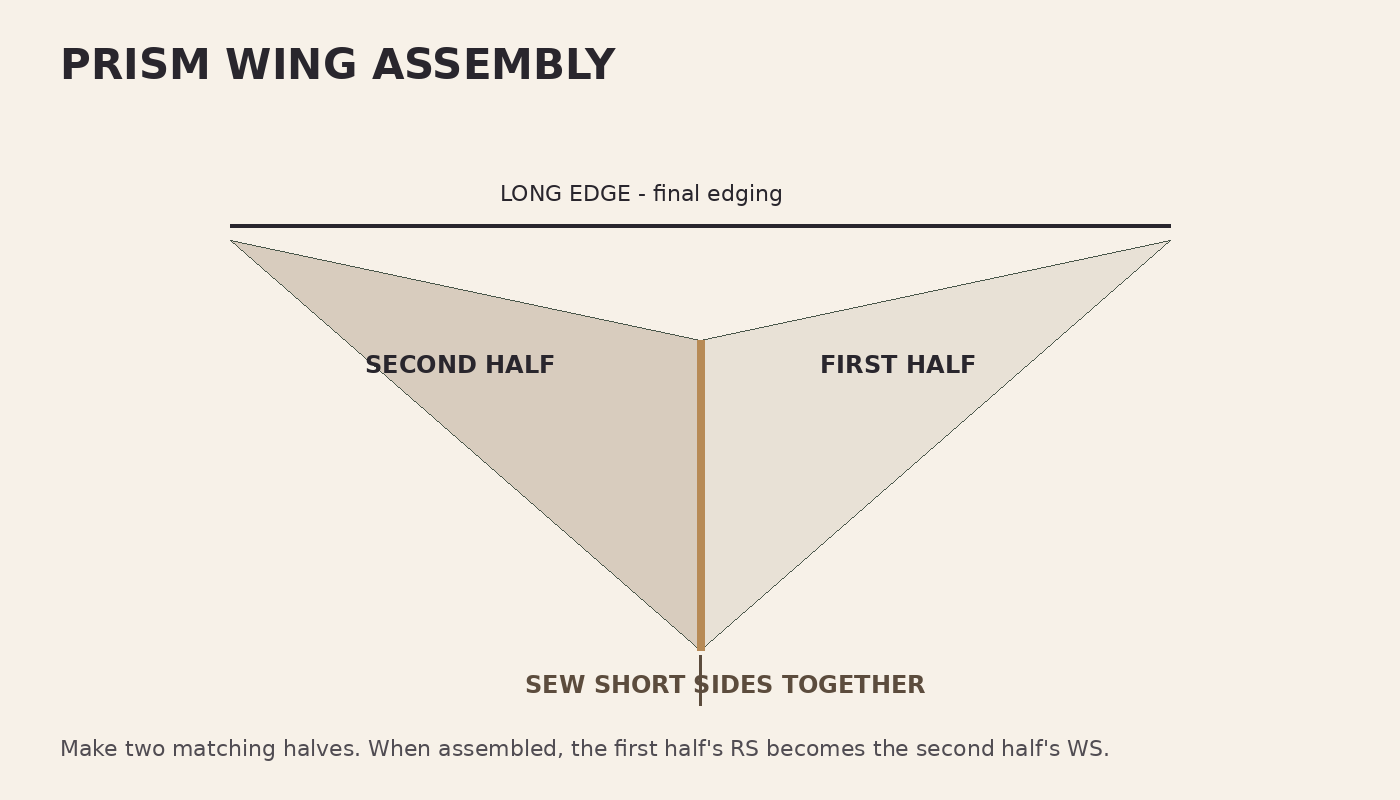
Make two matching halves and join the short sides to form the center spine.
Make the second half exactly like the first. The RS of the first half becomes the WS of the second half once joined. Place the two short sides together and sew them to form the center spine.
Long-edge finishing
Join Color A with a slip stitch to the right corner. Ch 1. Work scbl through both thicknesses across the long side of the shawl. Fasten off.
BEFORE EDGING
Lay the joined shawl flat. If the center seam twists, correct it before adding the long-edge row.
Choosing colors
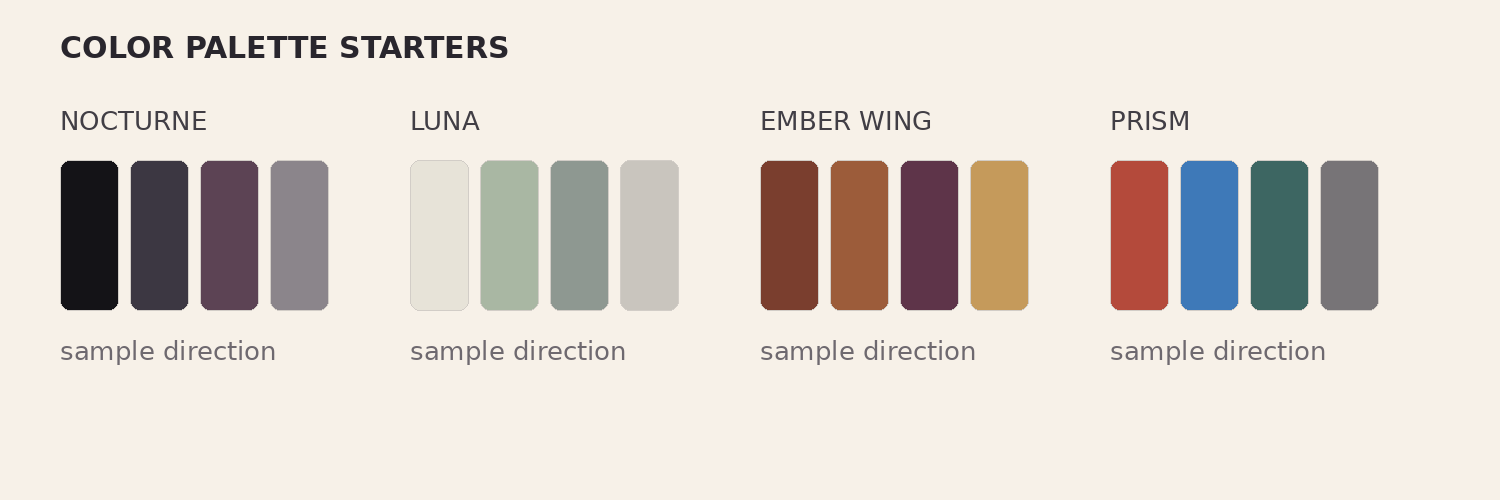
The easiest way to keep the striping cohesive is to let Color A act as the recurring anchor while B, C and D provide contrast. Four bright shades can make the shawl playful; a neutral A with three jewel tones produces a more polished result.
Troubleshooting
The center drifts: The marker likely moved to the wrong stitch. Each row’s center increase must be worked in the new center stitch of the previous 3-sc group.
The carried edge looks messy: Carry Color A consistently and keep the carried strand relaxed rather than pulling it tight.
The two wings do not match: Compare the short-side measurement and stripe count before joining. Correct any difference before seaming.
The shawl is too small: Your gauge may be tighter or the yarn thinner. Continue the Rows 5–6 repeat until the short side reaches the target measurement.
FAQ
Is Prism Wing suitable for beginners?
Yes. It is the easiest of the three Moth & Wing Shawls patterns. The main challenge is remembering to move the center marker every row.
Can I use fewer than four colors?
Yes. You can simplify the stripe plan, but keep track of your own sequence so the second wing matches the first.
Why is Color A not cut?
Color A returns frequently in the 24-row stripe repeat, so carrying it neatly up the side saves ends and keeps the sequence efficient.
Do I need to block it?
Blocking is recommended to straighten the center seam and shape the long points evenly.